
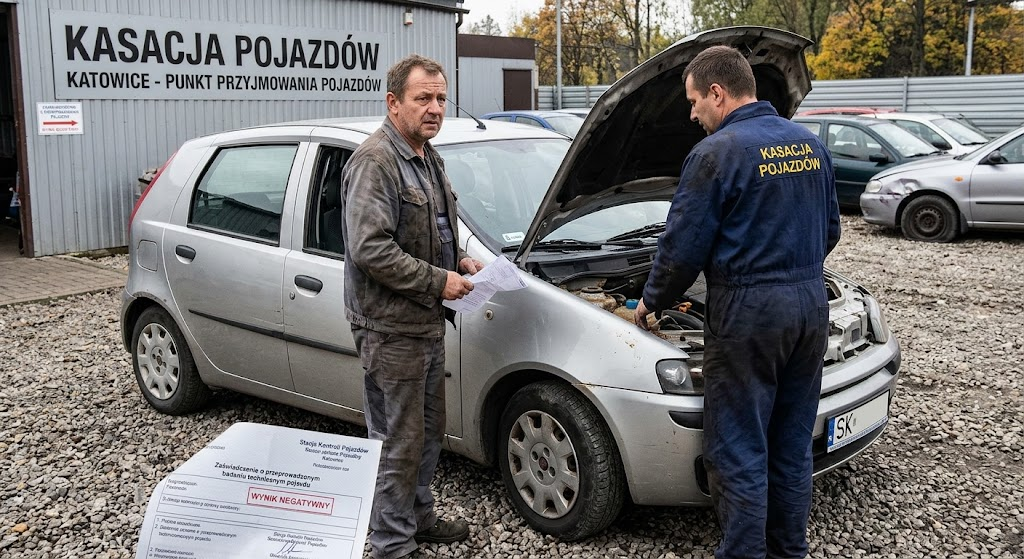
A failed vehicle inspection can leave any car owner facing a difficult decision. Sometimes the problem is relatively minor, such as a faulty light or worn tyre. In other cases, the inspection reveals serious braking issues, excessive corrosion, suspension damage, or mechanical defects that require expensive repairs. When the cost of restoring a vehicle becomes difficult to justify, owners may begin considering whether it is time to retire the car permanently.
For drivers in Katowice, understanding the available options after an unsuccessful technical inspection can prevent unnecessary expenses and help ensure that the vehicle is handled responsibly. Repairing the car may be worthwhile if the defects are manageable, but scrapping it could be a more practical solution when major problems make continued ownership uneconomical.
This guide explains how to assess an inspection failure, compare repair and disposal options, and understand the important steps involved in making the right decision.
1. Understand Why Your Car Failed the Inspection
Before deciding what to do with a vehicle, review the inspection results carefully. The report should help identify the defects that prevented the car from passing and indicate which areas require attention.
Some problems are relatively straightforward to resolve. A damaged headlight, defective indicator, worn windscreen wiper, or certain tyre-related issues may be repairable without a substantial investment.
Other defects can be more complicated. Problems involving brakes, steering, suspension, structural corrosion, or emissions systems may require professional diagnostics and replacement parts. The seriousness of the issue depends on the vehicle’s condition and the applicable technical requirements.
Ask the inspection station or a qualified mechanic to explain any findings you do not understand. If several defects have been identified, request an estimate covering the necessary repairs rather than focusing on only the most obvious problem.
This initial assessment provides a clearer picture of whether the vehicle can reasonably return to the road or whether continued investment may be financially impractical.
2. Calculate Whether Repairs Are Worth the Expense
A failed inspection does not automatically mean that a vehicle should be scrapped. Many cars can return to roadworthy condition after appropriate repairs. The important question is whether the expected cost makes sense for your circumstances.
Begin by obtaining a realistic repair estimate. Include parts, labour, diagnostic work, and any additional problems that may be discovered during the process. Older vehicles can sometimes develop further issues once repairs begin, so it is sensible to understand the possible risks before spending money.
Next, compare the estimated total with the car’s current market value and its likely value after successful repairs.
For example, an older vehicle might have several mechanical defects that require expensive work. If the combined cost approaches the price of a comparable replacement vehicle, repairing it may not be the most economical decision.
However, a car with a strong maintenance history and a relatively minor inspection failure may still justify repair. Consider your future transportation needs, the vehicle’s reliability, and the likely cost of replacing it before making a final choice.
3. Identify Safety Problems Before Driving Again
One of the most important considerations after an unsuccessful inspection is road safety. A vehicle should not be driven if its condition presents a danger to the driver, passengers, or other road users.
Defective brakes, unsafe steering, serious tyre damage, and structural problems can create significant risks. Even if a vehicle appears to operate normally, some faults may not be obvious during everyday driving.
Follow the inspection findings and obtain professional advice about whether the car can be moved safely. If it is not safe or legally permitted to drive, arrange appropriate transport to a repair workshop or another suitable destination.
You should also confirm the legal consequences of the inspection result with the inspection station or relevant Polish authority. The rules depend on the circumstances, including the type of defect and the vehicle’s registration and inspection status.
Do not assume that a short journey to a garage is automatically permitted simply because the destination is nearby. Establish the lawful and safe way to move the vehicle before arranging transportation.
4. When Does Vehicle Scrapping Become a Sensible Option?
Scrapping may be worth considering when the vehicle has extensive corrosion, serious structural damage, multiple expensive mechanical failures, or defects that cannot be economically corrected.
It may also make sense when replacement parts are difficult to obtain or when the vehicle has already required repeated repairs without delivering dependable performance.
However, the decision should be based on the overall situation rather than the inspection result alone. A vehicle that fails because of one repairable defect is very different from a car with several major problems.
Owners should consider the estimated repair cost, resale prospects, maintenance history, age, and expected future expenses. If the car is no longer economical to maintain, transferring it to an authorised end-of-life vehicle facility may be an appropriate option.
For drivers researching kasacja pojazdów Katowice, comparing the vehicle’s condition with the costs of repairing it can help determine whether professional dismantling is a reasonable next step.
5. How to Choose a Suitable Vehicle Disposal Facility
If you decide to retire the car, choose a facility that can handle end-of-life vehicles according to applicable Polish requirements.
Ask whether the facility is authorised to accept the vehicle and what documents are needed to complete the transaction. Requirements may depend on ownership status, registration details, and the vehicle’s circumstances.
Explain why the car failed its inspection. Information about structural corrosion, damaged suspension, engine problems, or other major defects can help the facility understand the vehicle’s condition.
If the vehicle cannot move under its own power, ask whether collection is available. Confirm the transport arrangements, any charges, and the paperwork that will be provided when the car is accepted.
It is also sensible to ask how the final transaction will be documented. Keep copies of the agreement and any certificate or confirmation issued by the facility.
Avoid choosing a provider solely because it offers the quickest collection. Clear procedures, appropriate authorisation, and reliable documentation are important when permanently disposing of a vehicle.
6. Prepare the Required Documents
Before arranging scrapping, gather the documents that establish your identity, ownership, and the vehicle’s details. Depending on the circumstances, these may include the registration certificate and other relevant ownership records.
If a document is missing, do not assume that the vehicle can be accepted without further checks. Contact the relevant registration authority and the intended facility to determine how the situation should be resolved.
Additional requirements may apply if the vehicle has multiple owners, belongs to a business, or is part of an inheritance. In these cases, confirm who has the legal authority to complete the transaction.
Once the vehicle has been accepted, retain the paperwork provided by the facility. Check the current Polish rules for reporting the vehicle’s disposal, completing any required deregistration procedure, and informing your insurer.
Completing these steps carefully can help prevent administrative problems after the car has been removed.
7. Consider the Environmental Benefits of Responsible Disposal
An old vehicle contains materials and components that should not simply be abandoned or discarded with ordinary rubbish. Tyres, batteries, oils, coolants, and other substances require appropriate handling.
An authorised end-of-life vehicle facility can follow procedures for removing hazardous materials and recovering suitable components and materials. Depending on the vehicle’s condition, certain parts may be reusable, while metals and other materials may enter appropriate recycling streams.
Responsible processing helps reduce the risk of contamination and supports more efficient use of recoverable resources.
Electric and hybrid vehicles require particular care because their high-voltage systems and batteries may need specialist handling. If the vehicle belongs to one of these categories, tell the facility in advance.
Choosing an appropriate disposal route is therefore important not only for administrative reasons but also for protecting the environment.
8. Make the Final Decision with Confidence
After reviewing the inspection report, obtaining repair estimates, and considering the vehicle’s condition, compare the available options realistically.
If repairs are affordable and the car is otherwise dependable, restoring it may be worthwhile. If the defects are extensive and the cost of repair cannot be justified, retiring the vehicle may offer a more practical long-term solution.
Avoid making the decision based solely on frustration after a failed inspection. A second professional opinion can be useful when the repair estimate is unusually high or the nature of the defect is unclear.
At the same time, do not keep spending money on a vehicle simply because you have already invested heavily in previous repairs. Past expenses cannot be recovered automatically, so focus on the likely costs and benefits from this point forward.
Conclusion
Failing a technical inspection does not always mean that a car has reached the end of its life. Some vehicles need only limited repairs, while others require major work that may not be financially sensible. Understanding the defects, checking road-safety requirements, and comparing realistic repair costs can help you choose the appropriate course of action.
If the vehicle is no longer economical to maintain, responsible disposal through an appropriately authorised facility may be the best option. Make sure you confirm the required paperwork, collection arrangements, and administrative responsibilities before completing the transaction.
When considering kasacja pojazdów Katowice, focus on safety, transparent procedures, and the vehicle’s overall financial situation. A well-informed decision can help you avoid unnecessary repair expenses and move forward with a safer, more practical transportation solution.
