
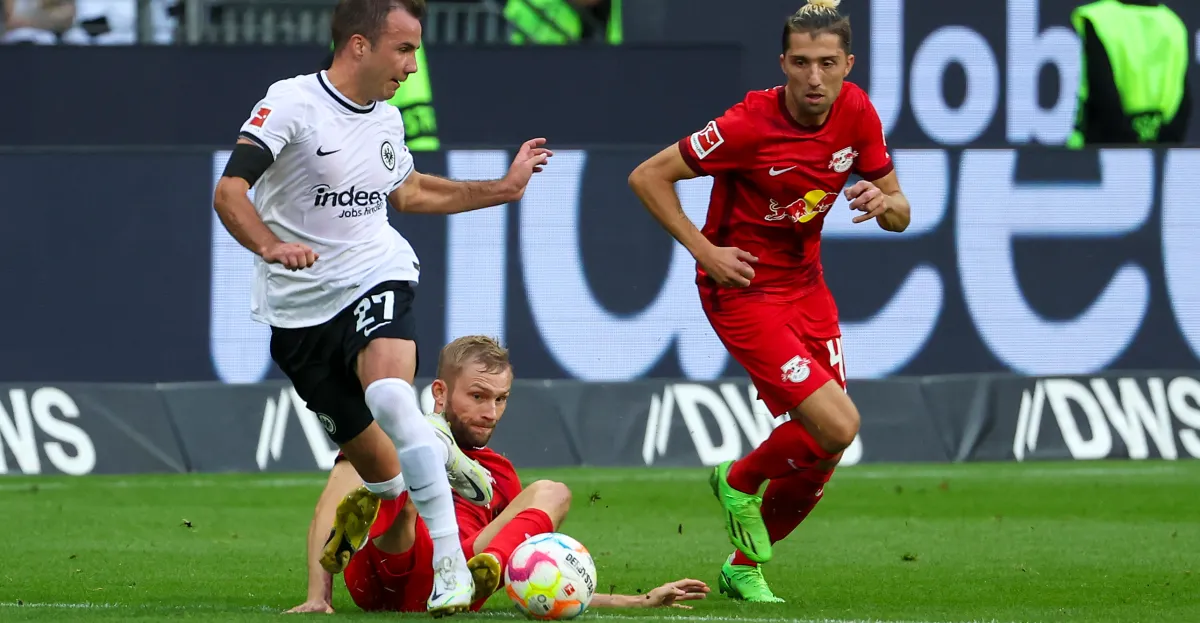
The Bundesliga is often framed as a league of pure transitions, yet several top sides excel at advancing the ball methodically through midfield rather than bypassing it. Those teams use structure, spacing, and line-breaking passes to connect their back lines with attackers, turning central progression into a repeatable source of controlled chance creation instead of relying only on fast breaks.
Why Building Through Midfield Still Matters in a Vertical League
Across Europe, analytics on progressive and line-breaking passes show that moving the ball through central zones remains one of the most reliable ways to reach dangerous areas with control. A StatsBomb study on the Bundesliga found that while teams in other top leagues averaged 40 or more completed line-breaking passes per match, Bundesliga sides were below 25, highlighting how high-tempo, direct play reduces central combination volume.
Even within that environment, certain German clubs stand out by stringing central progressions together more frequently. Their possessions that include a line-breaking pass followed by a progressive action generate disproportionate shares of shots and xG, meaning that when they successfully play through midfield, they often create one of their better chances of the sequence.
Which Bundesliga Teams Are Strongest at Central Progression
Central progression quality appears both in team-level passing chains and in how often line-breaking passes are followed by further advances. The StatsBomb analysis identified Bayer Leverkusen and Bayern Munich as the leading sides in absolute numbers of line-breaking passes into high-value central attacking zones in recent seasons, with Stuttgart not far behind.
In one sample, Leverkusen completed 756 line-breaking passes into central attacking areas, more than any other team, while Bayern managed 333 into the same zones but converted over 22% of those into subsequent progressive actions—the highest share in the league—underlining how vertical they were immediately after breaking a line. Stuttgart ranked third behind those two both in total “line-break → progressive action” chains and in shots, goals, and xG generated from such sequences, confirming them as another side that uses midfield progression as a key attacking route.
Mechanism: From Back Line to Attack via Central Channels
The route from defensive third to chance through midfield follows an identifiable chain. First, one of the centre-backs or holding midfielders finds a line-breaking pass into a central or half-space receiver between opposition lines. Second, that receiver either turns to drive forward, plays a quick wall pass, or connects to an overlapping runner, creating a second progressive action that pushes into the final third.
Because these actions happen centrally, the defence must collapse inward, which opens half-spaces or wide lanes for follow-up passes and runs. Teams that consistently complete both the initial line-break and the subsequent advance multiply their threat in a single possession, which is why the “line-breaking pass → progressive action” chain is such a strong predictor of attacking productivity.
Tactical Blueprints of Midfield-Building Sides: Leverkusen, Bayern, Stuttgart
Individual club models show how different coaches solve the same problem of central progression. Bayer Leverkusen’s recent tactical analysis notes their heavy use of line-breaking passes into attacking midfield lines, even if they do not always advance proportionally more often than others; in absolute terms, no team in the sample progressed more often through high-value central zones after breaking a line.
Bayern Munich, by contrast, produced fewer line-breaking passes into those zones than Leverkusen (333 vs 756 in one dataset) but turned a much higher share into aggressive follow-up actions, with more than 22% of such passes followed by a further progression, three percentage points more than any other team. Stuttgart under Sebastian Hoeneß add a third template: their build-up morphs from a nominal 4‑4‑2 into a 1‑3‑2‑5 in high build-up, with two holding midfielders supplying central options and five attackers providing height, which compresses spacing and facilitates playing through the middle rather than around it.
How Stuttgart’s Midfield Structure Turns Build-Up into Controlled Progression
Hoeneß’s Stuttgart offer a detailed case study of structured central progression in a league known for transitions. In low build-up, they use a 1‑4‑2‑4 shape with two forwards high to create gaps between opposition midfield and defence, which can be exploited when those forwards drop into space. In higher build-up phases, they shift into a 1‑3‑2‑5, adding a back three and two holders behind five advanced players, tightening vertical distances and providing multiple central options.
This architecture helps them “find the pockets”: passes from the back or from the wings target attacking midfielders in free central zones, who can turn and drive at the defence. In the final third, Stuttgart then attack half-spaces and flanks with underlaps and overlaps, but crucially the original penetration often begins with a central or half-space line-break, confirming that their middle-third structure is designed primarily to progress the ball, not just to recycle it.
Reading Midfield Progression from a Data-Driven UFABET Perspective
For someone approaching the Bundesliga with a data-driven mindset, teams that build through midfield stand out as sides whose attacks are repeatable and less dependent on transition chaos. Stats on line-breaking passes, successful passing from the final third, and central-lane turnovers reveal which clubs consistently connect defence to attack through their midfielders and which skip those zones with long balls. In a context where this understanding later informs decisions within a betting platform operated by ufabet168, it becomes a lens for explaining why certain teams maintain relatively stable xG even in slower games: their structures generate central progression regardless of open transition opportunities, which can justify tighter odds or higher expectations for sustained territory even against compact opponents.
Where Central Build-Up Strengthens or Exposes a Bundesliga Side
Playing through midfield strengthens a team by giving it more control over tempo and territory. Clubs that excel in this area can choose when to accelerate and when to circulate, reducing the randomness of long clearances and second-ball duels. Data on successful passes from the final third shows Bayern, Leverkusen, Dortmund, and Stuttgart as leading sides, reflecting their ability not only to reach advanced zones but to retain and reuse the ball there, reinforcing territorial dominance.
The same commitment can, however, expose teams under intense pressing. The Bundesliga’s high-pressing culture means that central progression attempts are often contested; misjudged line-breaking passes or slow receiving actions in midfield can be intercepted and turned into dangerous counters. This is why some coaches selectively mix direct and central routes, choosing to build through midfield more against passive blocks and to go over or around the press against hyper-aggressive opponents.
Applying Midfield-Progression Insight When Evaluating casino online Data
Different betting environments provide varying detail on how teams move the ball, from simple possession numbers to more nuanced breakdowns of pass locations and progression. When a user accesses an online betting site that surfaces stats on successful passes from the final third, central-lane losses, and progressive passing volumes, identifying Bundesliga teams that genuinely build through midfield becomes more straightforward than relying on possession percentages alone. In that richer data context, spotting that a fixture pits a strong midfield-progressing side against an opponent vulnerable to central line-breaks can guide expectations on territorial control, shot creation patterns, and whether the favourite’s attack depends on open transitions or can thrive even in more controlled, slower matches.
Summary
Bundesliga teams that build effectively through midfield stand out in a league celebrated for transitions by consistently using line-breaking passes and layered central structures to advance the ball. Bayer Leverkusen, Bayern Munich, and Stuttgart exemplify this trend, combining central progression with aggressive follow-up actions that lead directly to shots and xG. Recognising these patterns clarifies why some German sides can dominate territory and chance creation even when the game is not wide open, and why their results are often more stable than those of teams that live almost entirely off fast breaks.
