
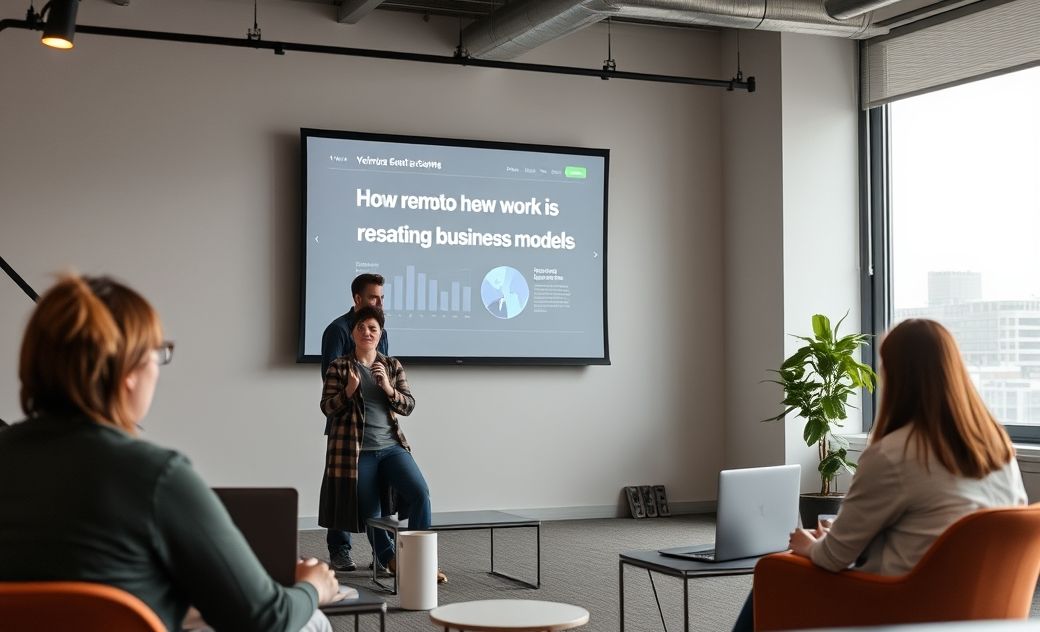
The world of work has undergone a radical transformation in recent years. The shift towards remote work, accelerated by the global pandemic, has not only changed where we do our jobs but is fundamentally reshaping how businesses operate. This transformation presents numerous opportunities and challenges for companies across various industries.
The Rise of Remote Work
Remote work, once a perk offered by few forward-thinking companies, has now become a standard for many businesses. This shift has been driven by advancements in technology, changing workforce expectations, and the necessity for flexibility. Businesses have had to adapt rapidly to this new model, often reconfiguring their operations and communication strategies.
Technology as an Enabler
The technology that supports remote work is more robust than ever. Cloud computing, collaboration tools like Slack and Zoom, and project management software such as Trello and Asana have made it possible for teams to maintain productivity regardless of their physical location. This has prompted companies to rethink their IT strategies, focusing on security and data management to support a decentralized workforce.
Shifting Workforce Expectations
Employees now expect greater flexibility in their work schedules and locations. Businesses offering remote work options can attract a wider talent pool, including individuals from diverse geographical locations. This diversification not only helps in bringing a variety of perspectives to problem-solving but also in enhancing creativity and innovation within teams.
Impact on Business Models
The rise of remote work has compelled businesses to rethink their traditional models of operation. Companies are now focusing on outcomes rather than time spent at a desk, leading to a results-oriented work culture.
Cost Reductions and Efficiency
Remote work allows businesses to reduce operational costs. Companies save on office space, utilities, and related expenses. Additionally, employees save on commuting, which translates to happier, more productive teams. The efficiency gains from remote work can be significant, as employees often enjoy a better work-life balance, motivating them to perform better.
Adjustments in Leadership and Management
Leaders today must adapt to managing remote teams effectively. This involves setting clear expectations, ensuring transparent communication, and building a culture of trust and accountability. Managers are required to leverage digital tools to monitor progress and provide support where needed, fostering a collaborative and inclusive work environment.
Challenges and Considerations
While remote work presents several advantages, it also poses unique challenges. Businesses must navigate these to successfully implement and sustain remote work models.
Maintaining Company Culture
One of the biggest challenges businesses face is preserving their company culture with a distributed workforce. Companies are investing in virtual team-building activities and regular check-ins to keep employees engaged and connected with their colleagues and the company’s mission and values.
Addressing Security and Compliance
With remote work, data security becomes a significant concern. Businesses must implement robust cybersecurity measures to protect sensitive information. This includes using secure VPNs, enforcing strong password policies, and ensuring that employees are aware of best practices for protecting company data.
The Future of Work
The shift to remote work is likely here to stay, at least in some capacity. As businesses continue to refine their approaches to remote work, hybrid models are emerging that combine the best of both in-office and remote work environments. This flexibility not only meets employee preferences but also equips businesses with the agility required in changing market landscapes.
Ultimately, remote work is more than just a temporary response to global events; it is a trend that is redefining how businesses operate and thrive in an increasingly digital world. By embracing this evolution, companies can position themselves for long-term success and resilience.
