
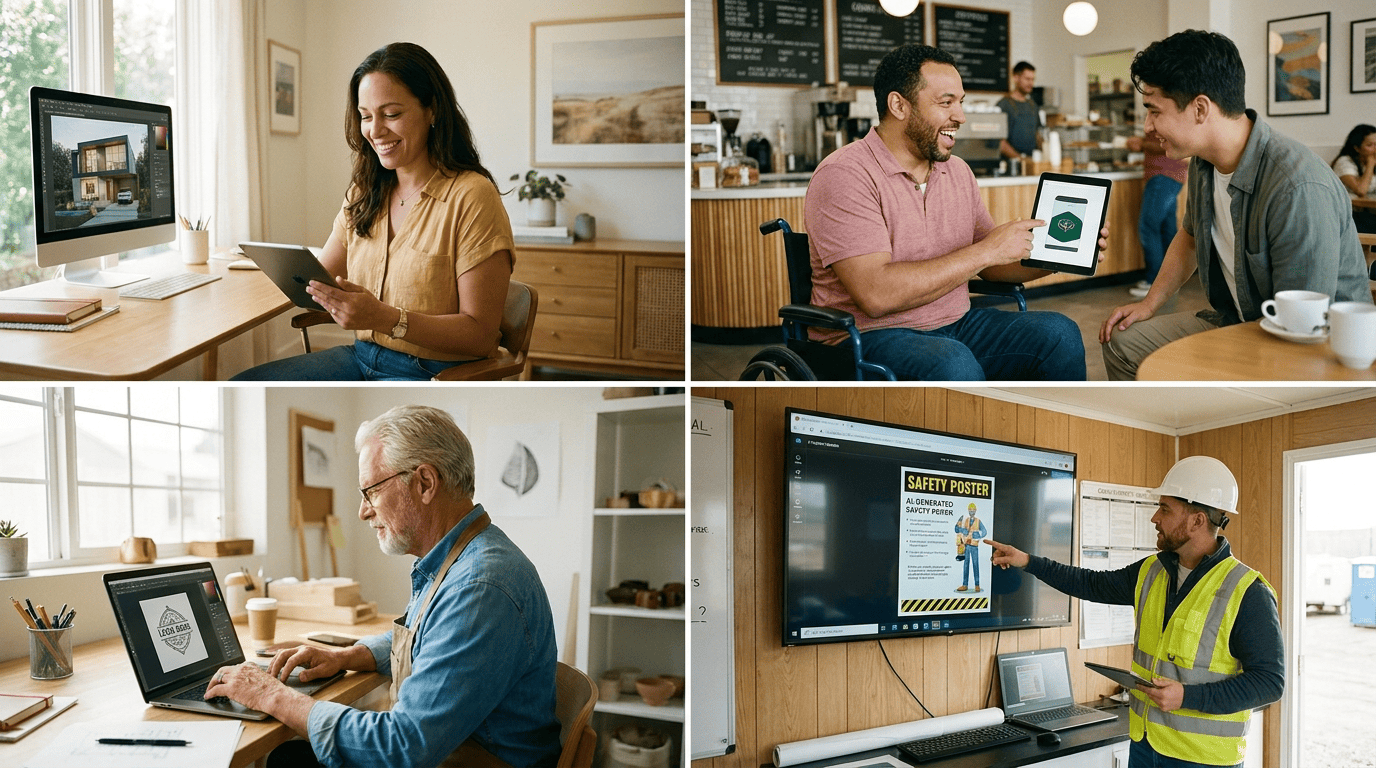
For decades, the path to creating professional visual content was narrow and difficult. It required high-priced software suites, years of technical training, and a refined artistic eye. If a marketing manager or a founder needed a high-quality visual for a campaign, they had two choices: wait weeks for a creative department or pay thousands of dollars to an external agency.
This bottleneck has long been the primary friction point in the creative industry. The demand for content has exploded with the rise of social media and direct-to-consumer (DTC) marketing, yet the speed of production remained stagnant. This is where the landscape has fundamentally shifted.
Non-designers are no longer waiting for permission to create. They are utilizing an ai image generator to bypass traditional roadblocks and produce studio-quality assets in minutes. This shift is not just about convenience; it is about the professionalization of the amateur creator.
The Problem: The High Cost of the Creative Bottleneck
The modern business environment moves at the speed of the internet. A trend on social media might last only 48 hours. If a brand cannot produce a high-quality visual to capitalize on that trend within that window, the opportunity is lost.
Traditional design workflows are often too slow for this pace. The process of briefing, sketching, revising, and finalizing an image can take days or even weeks. For non-designers, this creates a dependency that hampers growth.
Furthermore, professional photography and studio shoots are expensive. For a startup or a growing DTC brand, spending five figures on a single product shoot is often unsustainable. These users need a way to generate high-fidelity, brand-accurate visuals without the overhead of a traditional studio.
The Industry Shift: From Art to Utility
We are witnessing a massive transition in how visual content is perceived. In the past, digital art was often created for its own sake. Today, the fastest-growing segment of users sees AI as a commercial utility.
These users are marketers, sales professionals, and product managers. They are not looking to become digital painters. They are looking to “ship creative” that converts viewers into customers.
AI could add trillions of dollars in value to the global economy, specifically within marketing and sales functions. This economic drive is why non-designers are adopting these tools at a faster rate than traditional artists.
How Higgsfield Redefines Professional Workflows
While early AI tools were fun to experiment with, they often lacked the precision required for serious brand building. A professional ai image generator must do more than just create a pretty picture. It must provide repeatable results and maintain brand integrity.
This is where higgsfield enters the picture as a specialized creative engine. It is designed to bridge the gap between a vague idea and a production-grade asset. It moves the user away from simply “burning tokens” on random experiments toward a structured, professional output.
By unifying top-tier models like FLUX.1, Seedream, and Reve, higgsfield allows users to choose the specific aesthetic they need for their project. Whether it is cinema-grade lighting or hyper-realistic textures, the platform acts as an infrastructure for modern creative departments.
Key Specialized Models for Non-Designers
- Higgsfield Soul: This model focuses on professional aesthetics and high-end photographic quality.
- Seedream: Ideal for highly creative, conceptual visuals that push the boundaries of traditional photography.
- Nano Banana Pro: Optimized for speed and efficiency without sacrificing the 4K resolution required for modern displays.
- Flux.1: Known for its technical precision and ability to handle complex prompts with ease.
Why Non-Designers Choose Professional AI Platforms
The reason non-designers are flocking to these tools is rooted in the “Creative Engine” philosophy. They do not want a toy; they want a marketing studio. Here are the primary drivers of this growth:
- Character Consistency: One of the biggest hurdles in AI was “identity drift,” where a character would look different in every frame. New features like Soul ID allow users to maintain consistent characters across multiple images and videos.
- Native 4K Output: For professional use, resolution is non-negotiable. Using a high-quality ai image generator ensures that the output is ready for large-format ads or high-definition social feeds.
- Flawless Text Rendering: Early AI struggled with spelling. Professional tools now handle text with precision, making them perfect for creating posters, social media cards, and digital ads.
- Predictable Results: Marketers need to know that if they input a specific prompt, they will get a specific result. The focus has shifted from “random AI hallucinations” to repeatable, reliable workflows.
Strategies for Using AI Image Generation Effectively
For a non-designer to succeed, they must treat the ai image generator as a partner rather than a magic wand. Here are actionable strategies for producing professional-grade content:
Define Your Brand Visual Language
Before generating images, define your color palette and lighting style. If your brand uses “warm, golden hour” lighting, ensure that these keywords are part of every prompt. This consistency is what separates a professional brand from a casual user.
Use Image-to-Video Conversions
The most efficient way to scale content today is to turn high-quality stills into engaging video. A professional workflow starts with a perfect 4K image and uses seamless conversion tools to create social media ads. This saves hours of video editing time and reduces the need for expensive motion graphics artists.
Leverage Seed Consistency
When you find a style or a composition that works, use the “seed” number to create variations. This allows you to generate a whole series of images that look like they were part of the same professional photoshoot. This is a core feature in higgsfield that allows for professional-grade execution.
The Move Toward Commercial-Ready Execution
The ultimate goal for any non-designer using these tools is “shipping.” In a business context, an image is only valuable if it can be used in a commercial setting. This requires “cinema-grade” output and “brand-accurate” colors.
Platforms like higgsfield understand this requirement. By providing a Marketing Studio environment, they offer more than just pixels. They provide the tools for virality prediction and multi-format generation. This shifts the focus from AI experimentation to serious brand building.
A non-designer can now act as a creative director. They provide the vision and the strategic direction, while the ai image generator handles the technical execution. This allows for a massive increase in creative output without a corresponding increase in budget.
Solving the Hallucination Problem
One of the reasons professionals were hesitant to use AI in the past was the risk of “hallucinations,” or strange artifacts in the images. Professional-grade engines have significantly reduced these errors.
By using advanced models like Higgsfield Soul, users can generate images that are indistinguishable from real photography. This reliability is the foundation of a professional creative department. It allows a brand to scale its high-quality video and image production without the traditional costs of a studio shoot.
Conclusion: The New Creative Infrastructure
The growth of non-designers in the AI space is a signal that the tools have finally caught up to the needs of the market. High-performance engines like higgsfield are becoming the essential infrastructure for modern business.
The shift is clear: we are moving from a world where only a few could create, to a world where anyone with a strategic vision can produce world-class content. By focusing on repeatable workflows, character consistency, and commercial-grade output, non-designers are setting a new standard for what is possible in the digital age.
The barrier to entry has disappeared. Now, the only limit is the quality of the idea. With a professional ai image generator at their disposal, the fastest-growing group of users is proving that you do not need to be a designer to create something extraordinary.
